Secure · never sold to brokers
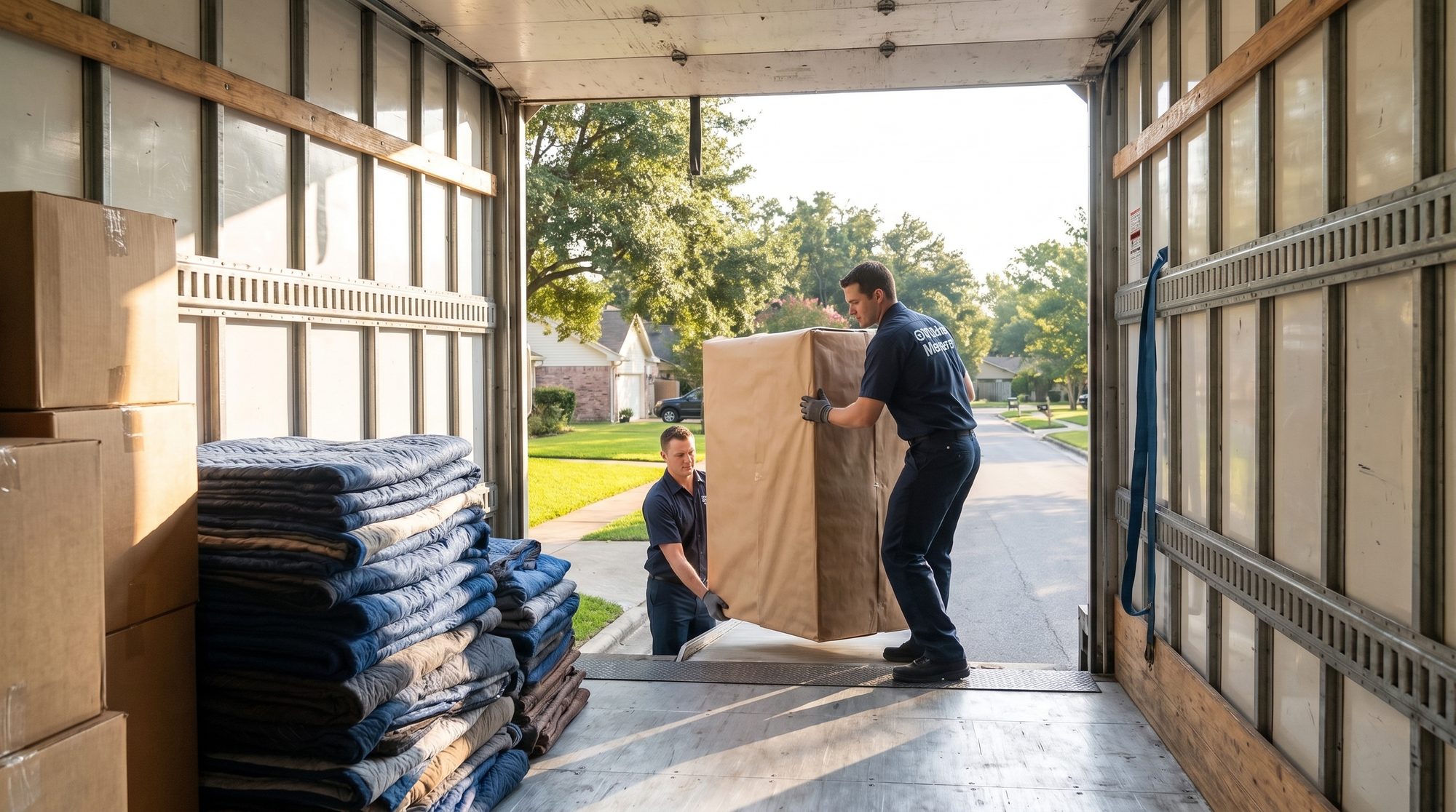
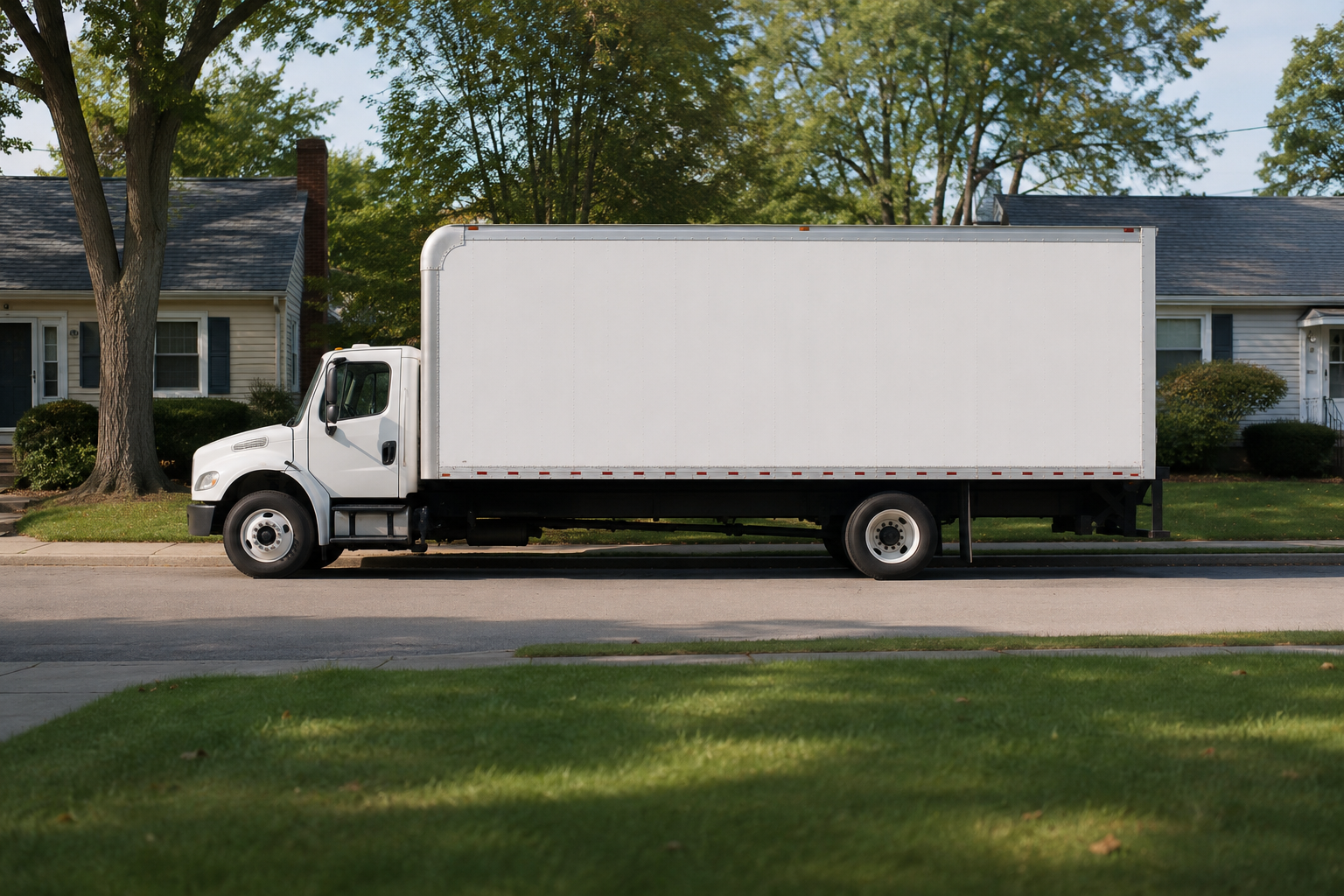
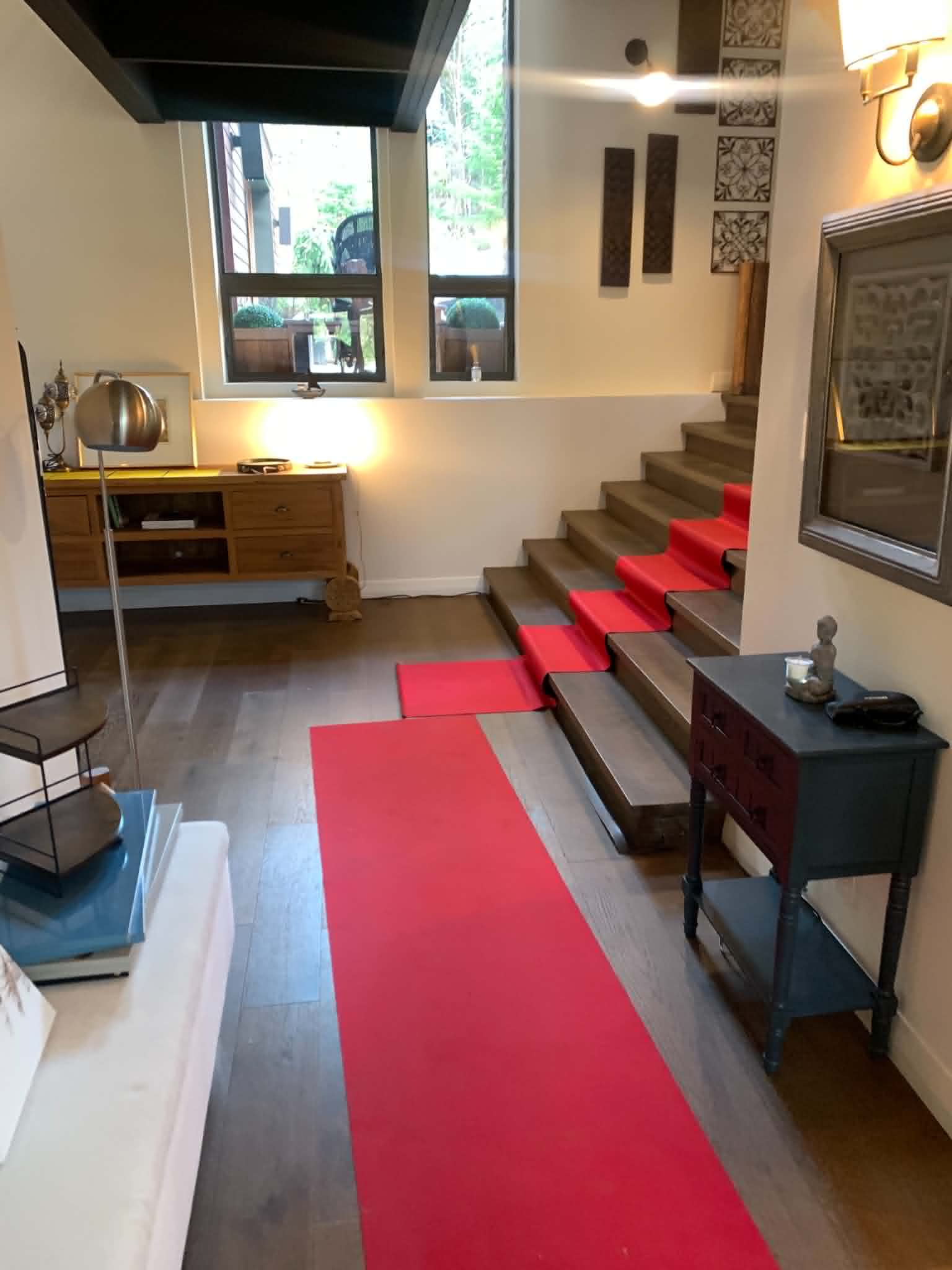
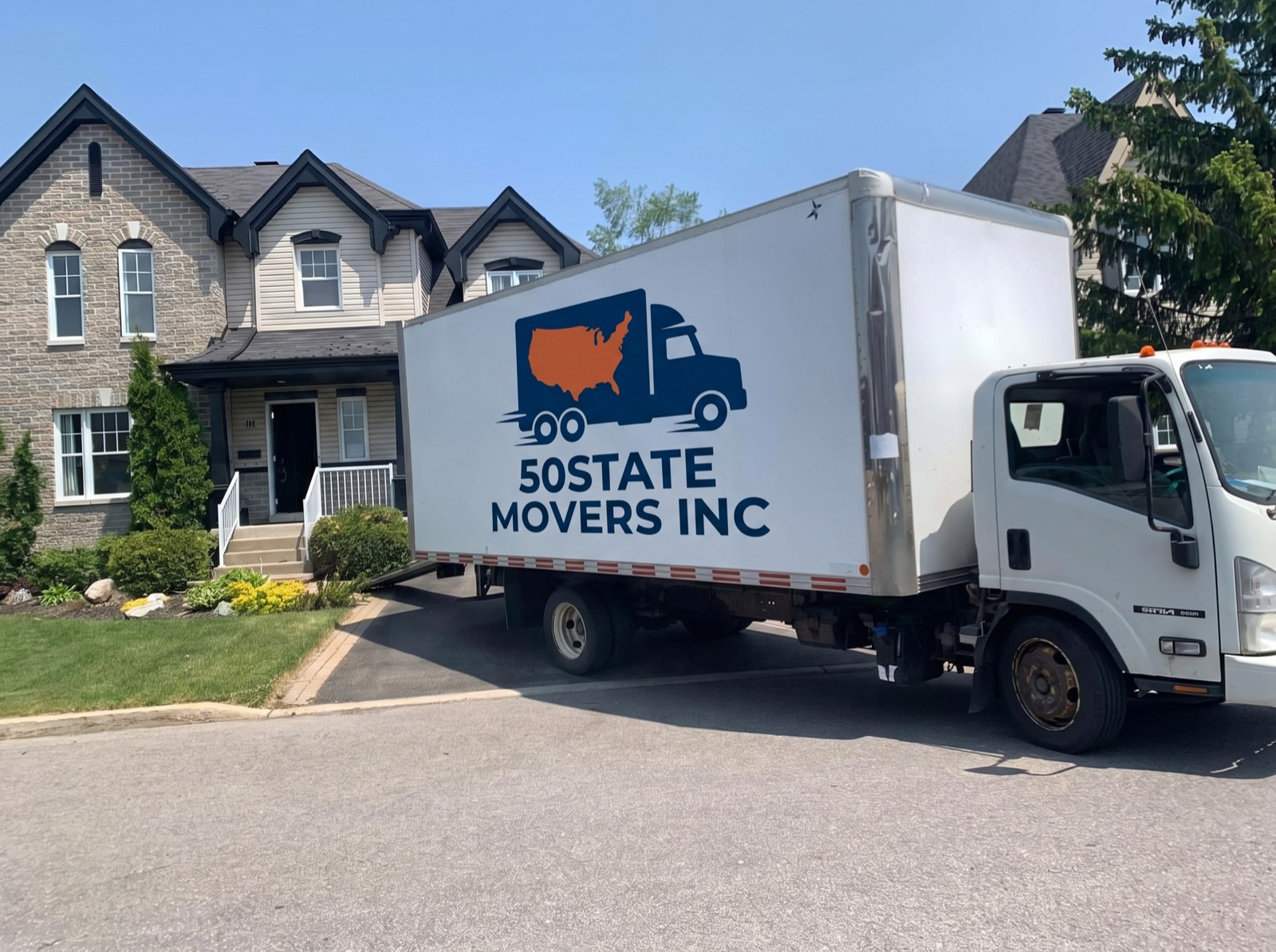
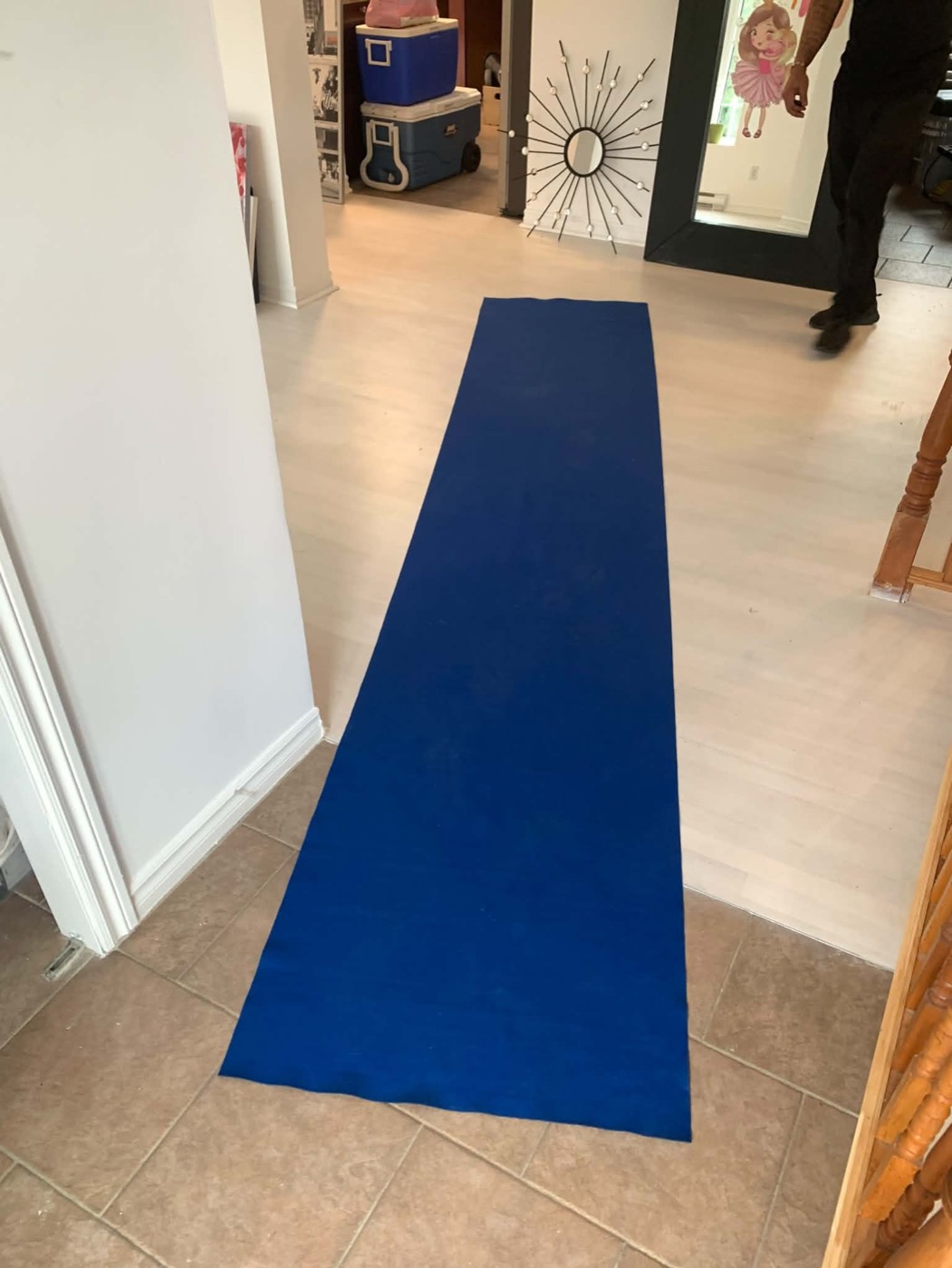
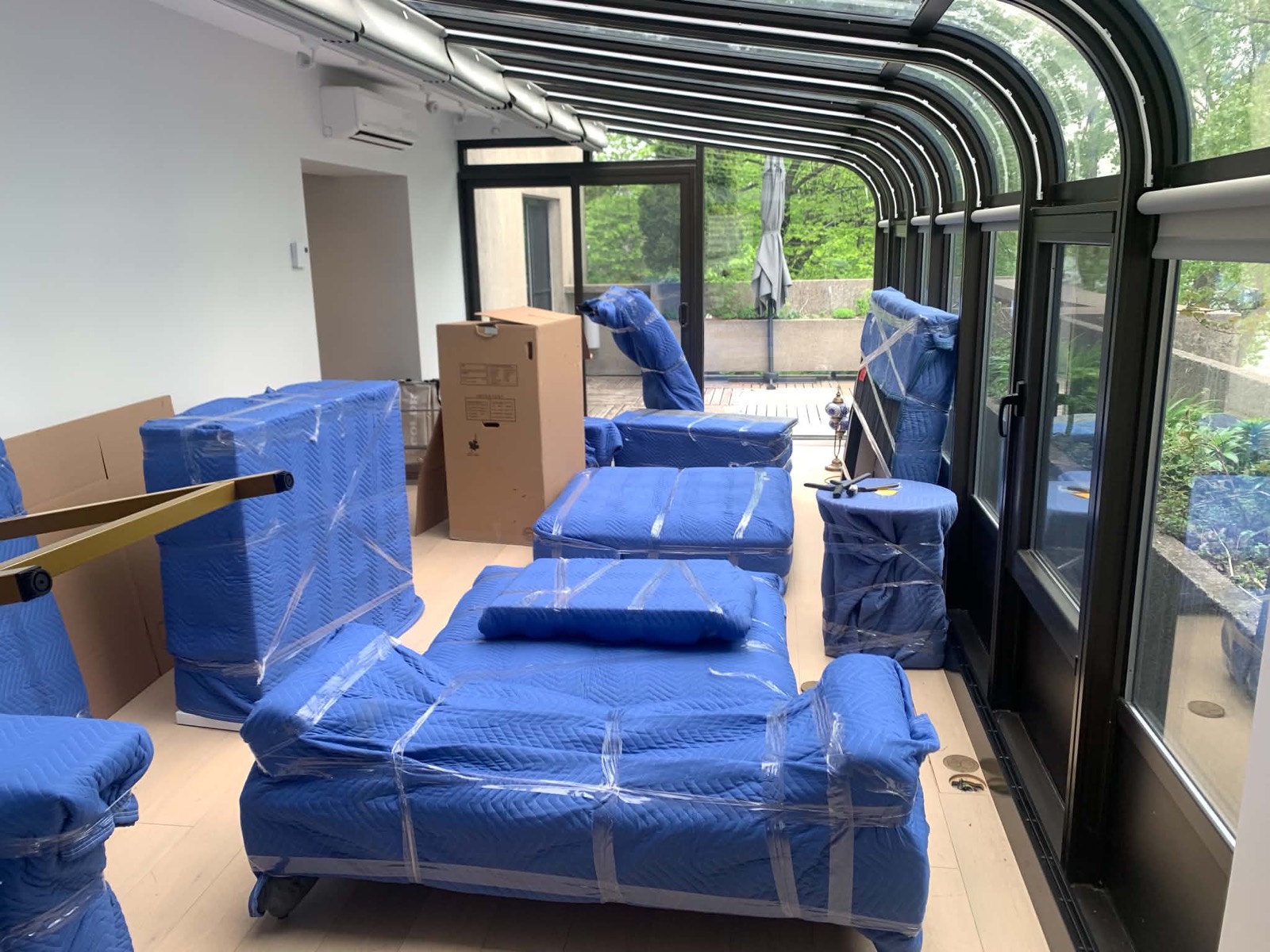
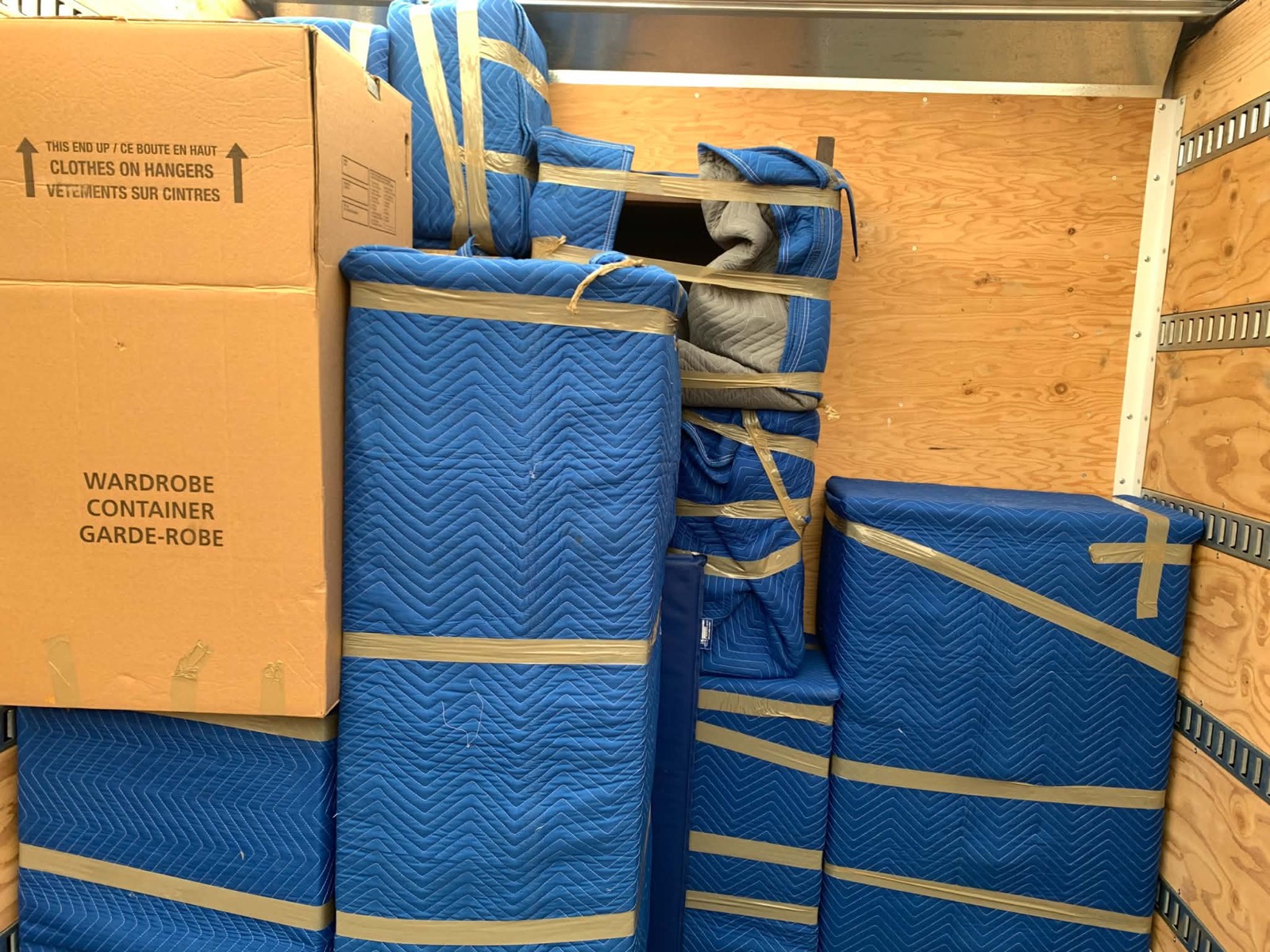
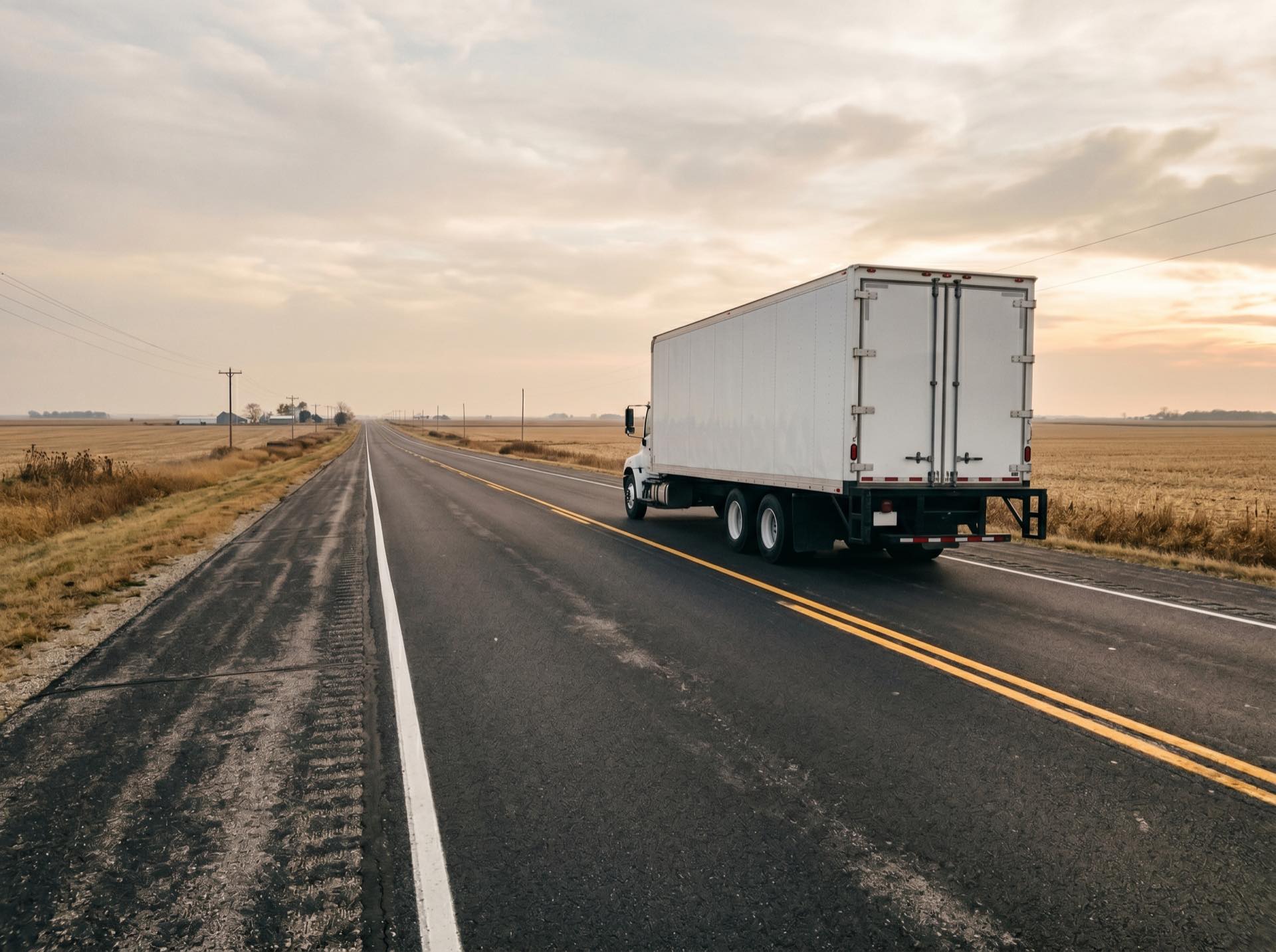
One job, four stages — photographed on our own New York movers at work, not bought in.
Floor runners and jamb pads go in before anything is lifted.
Furniture is blanket-wrapped and shrink-wrapped before it leaves the room.
Strapped row by row, so the load rides the same at mile 900 as at mile one.
Unloaded into the rooms you point to, on the date in your contract.
Rural pickups are routine for us, not an exception. The list below is the largest municipalities; the routes behind it reach a great deal further. Call +1 (888) 505-1086 and we'll tell you straight away whether your address is on one.
New York leans on packing and storage more than any other state we serve. Building move windows are narrow, walk-ups make disassembly routine, and the gap between a New York move-out and an out-of-state closing means storage-in-transit is the norm rather than the exception. White glove work is constant in Manhattan and Westchester.
Get my fixed price
Cross-country and interstate relocations. We coordinate logistics, customs paperwork, and destination unpacking — all door to door.
Concierge moving at the top of the range: we pack every item, move it, unpack it, put the furniture where you want it, and hang the artwork.
Studios through to large family houses. Furniture comes apart, travels, and goes back together — and the crew stays until each room is set.
Office relocations handled after hours or over weekends, so your team is working from the new space on Monday morning — no downtime.
Gallery-standard packing for artwork, antiques, and delicate pieces — and purpose-built crates made at your address when stock sizes don't fit.
Secure, climate-controlled units under round-the-clock monitoring — a few weeks or a few years, insured and inventoried the whole time.
We would rather explain the price than advertise one. A number produced without a survey has nothing behind it, which is how people end up owing more than they were told. These are the factors that move the cost of a New York move — itemized up front, fixed once agreed.
Every state has its own access problems, weather windows, and rules. Here's what shapes a New York move in practice.
The defining constraint is building access. Nearly every Manhattan and Brooklyn building requires a COI naming the owner and managing agent, a reserved freight elevator, and a weekday move window — many buildings allow moves only between 9 a.m. and 4 p.m. Commercial vehicles are banned from the Hutchinson, Saw Mill, Belt, and other parkways, and low bridge clearances on those routes are a genuine hazard. Walk-ups with tight turning stairs are standard. Main corridors: I-95, I-87, I-90 (Thruway), I-495 (LIE), I-278.
Peak is May through September with the heaviest concentration around the end of the month, when most city leases turn. The last weekend of June and of August are the hardest dates in the region. Winter is meaningfully quieter and building elevators are far easier to reserve, though snow, alternate-side rules, and cold-weather loading slow things down. Upstate winters bring lake-effect snow that can close I-90 near Buffalo and Syracuse.
New York's net outflow is the largest of any state in absolute terms, with Florida, New Jersey, Pennsylvania, the Carolinas, and Texas the leading destinations. The city continues to draw enormous inbound volume from around the country and the world, so gross moving activity is huge in both directions. Upstate metros lose population steadily to the Sun Belt and to the city, though Buffalo and Albany have stabilized in recent years.
Interstate moves out of New York are federal: look for an active USDOT number and FMCSA authority. Ours are USDOT #4575745 and MC-1820728. Movers operating only inside the state answer instead to the New York State Department of Transportation, which licenses intrastate household-goods carriers — a registration that is not authority to take your belongings across the line.
Most overruns on a New York move trace back to one of the three below. We ask about all three up front so the price reflects them from the start.
This is the make-or-break detail in New York City. Buildings often require the COI a week ahead with exact wording, and freight elevators book out. Send us the building's move-in packet as soon as you have it.
Commercial vehicles are prohibited on the region's parkways, where clearances are too low for a moving trailer. Routing goes via the interstates and truck routes, which affects timing more than distance.
City leases cluster at month end, and the last weekends of June and August are the hardest dates in the region. Six to eight weeks ahead is the difference between a move and a scramble — if your date is closer than that, call us and we will tell you straight away what we can hold.
A look at the homes, offices and cross-country relocations our New York movers have handled.
The things people actually ask before booking New York movers for a move out of state.
A certificate of insurance naming the building owner and managing agent as additional insured, usually with specific coverage limits and exact wording; a reserved freight elevator; and a move confined to weekday business hours. Forward us the move-in packet as soon as you get it — this is the most common cause of a canceled move date.
About 1,550 to 1,750 miles — 6 to 11 days on a consolidated load and 3 to 4 days dedicated. You get a delivery spread at booking and a firm 24-hour window once the truck is dispatched.
Yes, routinely. What matters is telling us the floor count and stairwell shape at survey. Tight turning staircases change both crew size and the disassembly plan, and we would rather price it correctly than renegotiate on the day.
Considerably. Buffalo, Rochester, Syracuse, and Albany have driveways, wide streets, and no permit requirements, so the same size household is a far simpler job. The main seasonal factor is lake-effect snow, which can close I-90 for a few hours at a time.
Yes, under two different regimes. Household goods moving over a state line fall to the FMCSA, which issues the USDOT number and the operating authority that goes with it — we hold USDOT #4575745 and MC-1820728. Check any mover's numbers on the FMCSA's free SAFER lookup before you pay a deposit.
If a company only moves people around inside New York, its registration comes from the New York State Department of Transportation, which licenses intrastate household-goods carriers and stops at the state line — it is no licence to take your belongings interstate. That mismatch is the commonest fault in competitor paperwork customers forward to us. Add two more checks of your own: binding price or revisable estimate, and carrier or broker. We are a carrier quoting binding fixed prices, moving you with our own crew on our own truck.
The whole continental map is in range. Listed here are the states our New York movers most often deliver to, with a dedicated guide behind each on logistics, building access, and timing.
Our team is available 24 / 7. Call us or send an email and we'll get back to you within a few hours.