
Secure · never sold to brokers
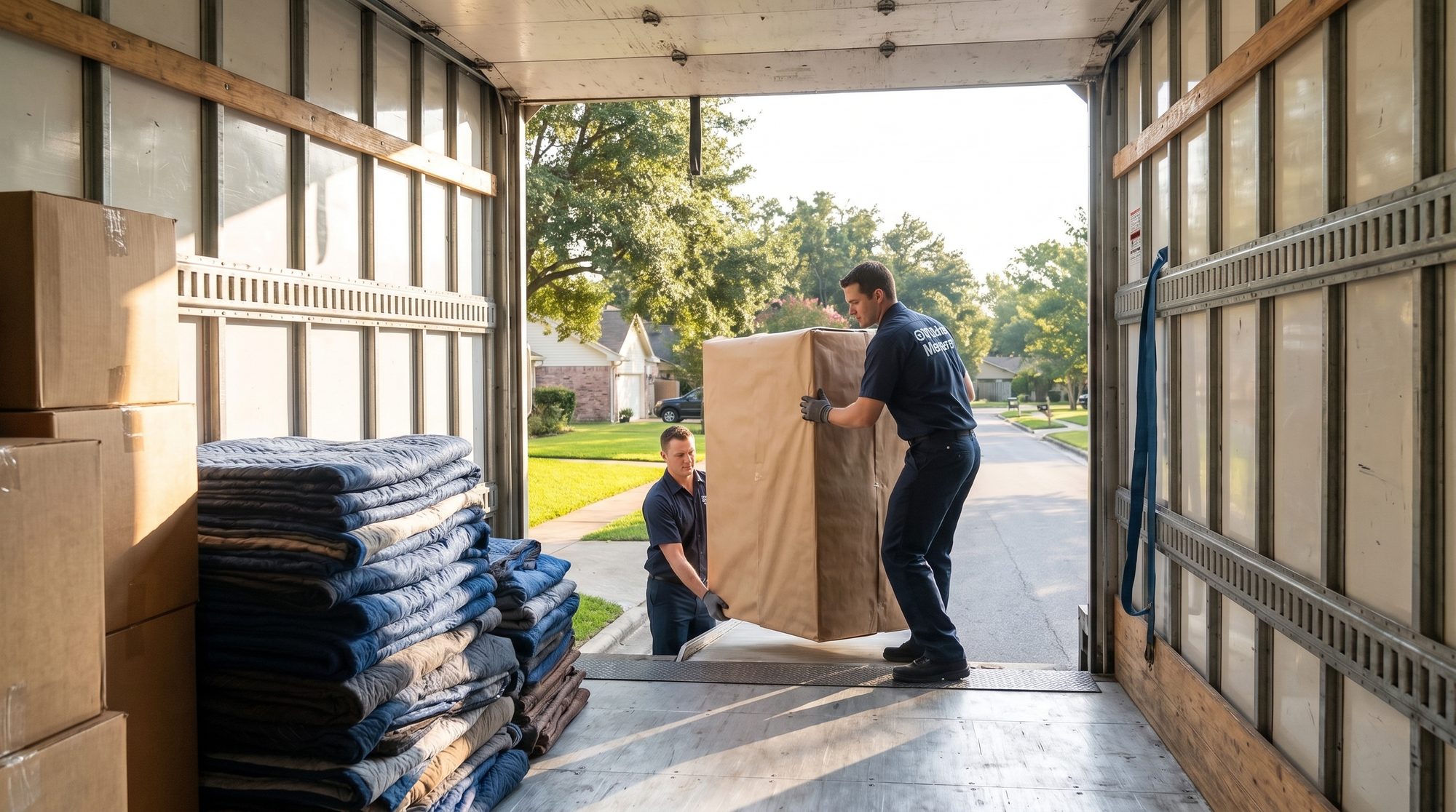
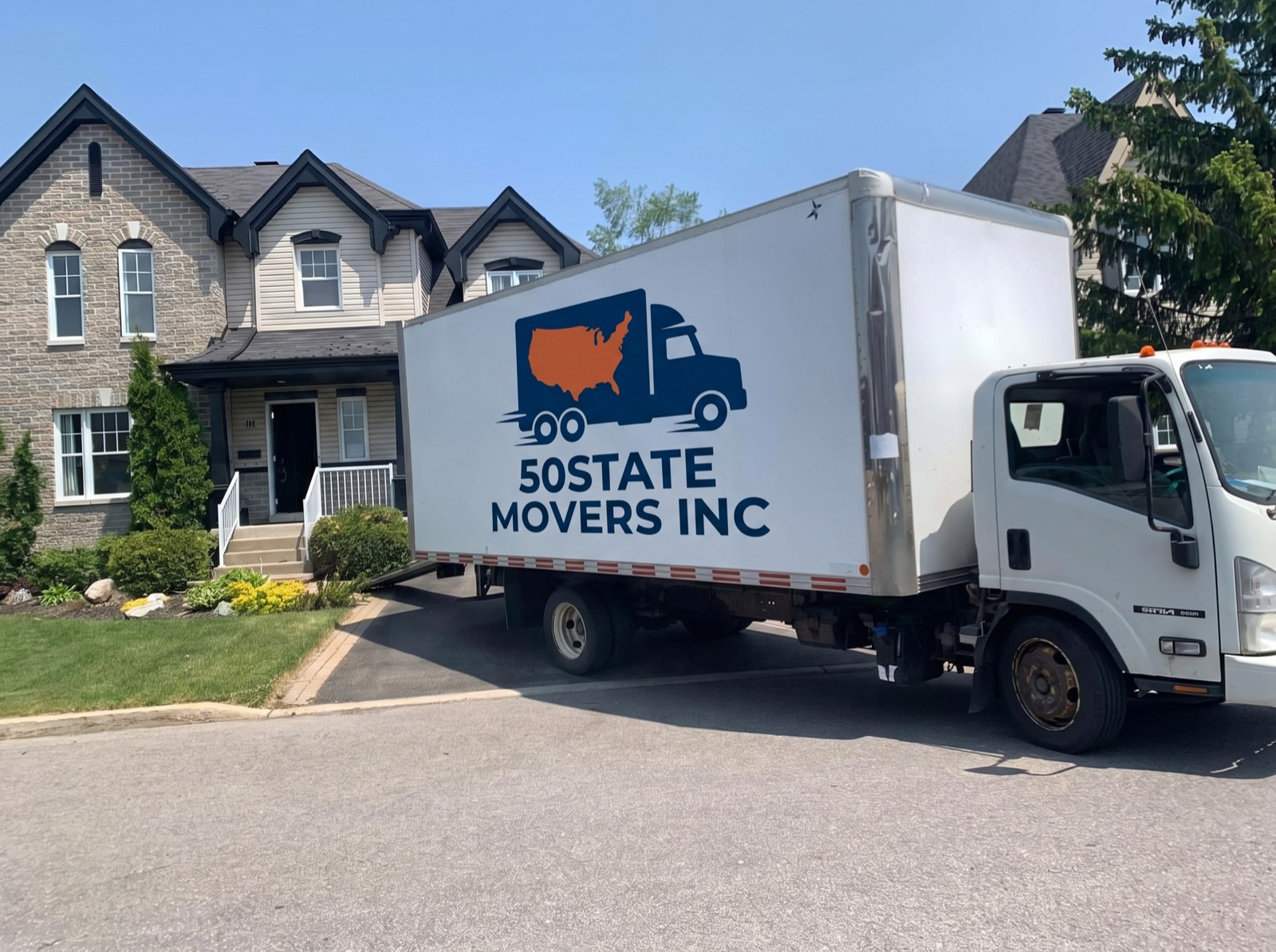
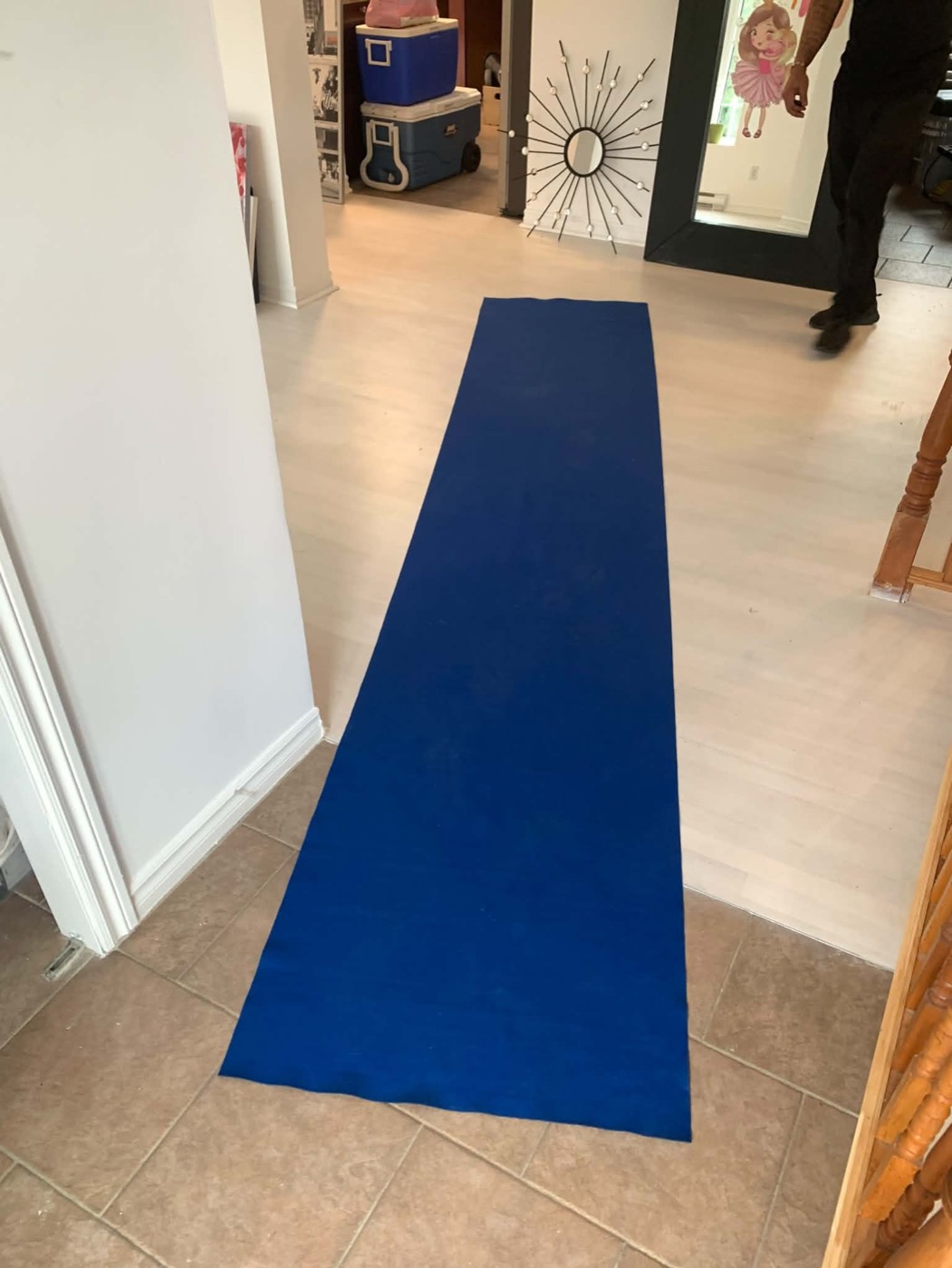
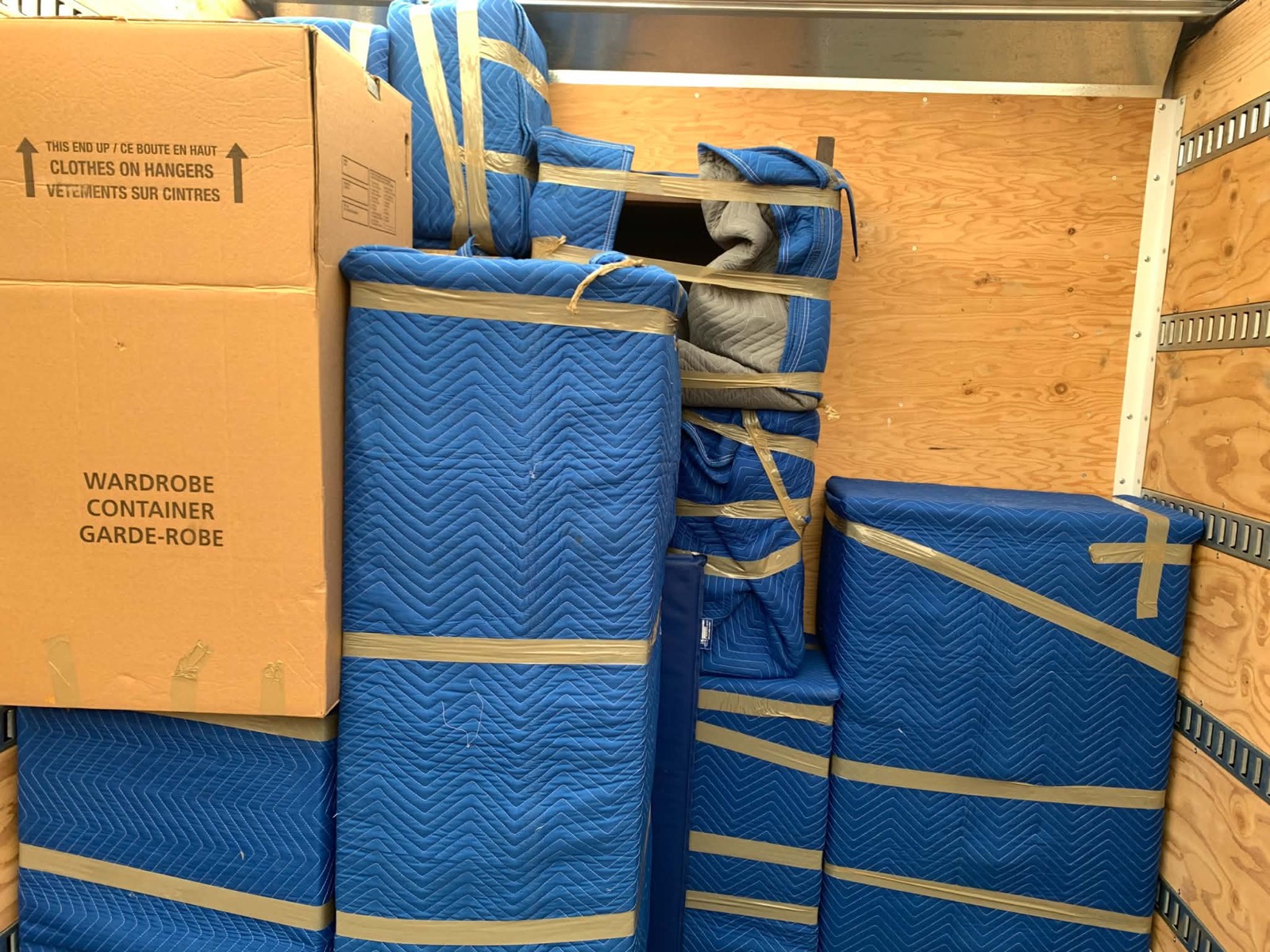
No stock photography. These are the movers from Florida who would be on your job.
Runners, jamb pads and corner guards before the first carry.
Blankets, shrink and tape on every piece — not only the fragile ones.
The load is built in tiers and tied off, so nothing moves on the highway.
Carried to the room you choose, inside the window we agreed in writing.

Our trucks work the whole of Florida, small towns included. A place that isn't on this list is usually still on a lane we already run — ring +1 (888) 505-1086 and we'll check the access before we quote you.
Florida's biggest service demands are storage and packing. Condo boards approve move dates on their own schedule, which regularly leaves a gap between move-out and move-in, and the state's humidity makes climate-controlled storage the right default rather than an upsell. White glove work is common in Naples, Palm Beach, and Miami Beach.
Get my fixed price
Long-haul household relocations across the continental map — scheduling, documentation, and unpacking on arrival included, with one crew responsible throughout.
The top tier. Concierge-level service: we'll pack, transport, unpack, arrange, and even hang the art on the walls before we leave.
Household moves of every scale. Beds, wardrobes and tables are dismantled, transported and reassembled, and nobody drives off until it is all where it belongs.
Offices, studios and workspaces relocated outside trading hours. The aim is simple: no lost working days between the old address and the new one.
Art, heirlooms, instruments, and glass packed the way galleries pack them, with bespoke crates constructed in your home for anything off-size.
Warehousing with climate control and 24-hour security. Use it for a week between closings or indefinitely; the inventory and the insurance run throughout.
There is no price table on this page on purpose. A figure quoted before anyone has seen your household is a guess, and guesses are what become revised invoices at the far end. What follows is what genuinely shifts the cost of a Florida move — each line itemized in writing before you sign, and binding once you do.
The practical detail changes by state — where the trucks can go, when the weather cooperates, who licenses whom. Here is how that plays out in Florida.
I-95 on the east coast, I-75 on the west, and I-4 across the middle carry nearly all Florida moving traffic, and I-4 through Orlando is among the most congested corridors in the Southeast. The defining access issue is vertical: condo towers from Miami Beach to Naples require a certificate of insurance, a reserved freight elevator, and often a move window restricted to weekday mornings. Gated and 55-plus communities add registration requirements on top of that. Main corridors: I-95, I-75, I-4, I-10, Florida's Turnpike.
The moving calendar here is inverted relative to most of the country. Winter and early spring are peak season as snowbirds and retirees arrive; June through November is hurricane season, when we build flexibility into coastal delivery windows and will not run a loaded trailer into a landfall forecast. Late spring — April and May — is often the best combination of weather and availability in Florida.
Florida's inbound flow is enormous and comes primarily from New York, New Jersey, Illinois, Pennsylvania, and Ohio, concentrated in Tampa Bay, Southwest Florida, and Central Florida. What gets less attention is outbound volume: rising insurance premiums, HOA assessments, and coastal housing costs have pushed a steady stream of Florida households toward Texas, Tennessee, the Carolinas, and Georgia. The Villages and Southwest Florida remain overwhelmingly net inbound; South Florida is closer to balanced.
Interstate moves out of Florida are federal: look for an active USDOT number and FMCSA authority. Ours are USDOT #4575745 and MC-1820728. Movers operating only inside the state answer instead to the Florida Department of Agriculture and Consumer Services (FDACS), which registers intrastate household-goods movers — a registration that is not authority to take your belongings across the line.
These three catch people out in Florida often enough that we look for all of them at survey — which is how they end up in the quote instead of on the final invoice.
Most Florida towers require an approved COI, a reserved elevator, and sometimes an association-approved move date. Approval can take a week or more. This is the single most common source of Florida move delays.
From June through November we track named storms against your route and dates. We would rather hold a load 48 hours than deliver into an evacuation zone, and your contract accounts for that.
Standard warehouse storage in Florida is hard on leather, wood, and upholstery. If your goods will be stored more than a few weeks, climate control is worth asking for.
Crews at work: the Florida movers who handle family homes, business relocations and cross-country hauls.
What customers want settled before they choose between Florida movers and the national vans.
Almost always a certificate of insurance naming the association as additional insured, a reserved freight elevator with protective padding, and a move confined to specific weekday hours. Some associations also require board approval of the move date. Send us your building's move packet as early as possible.
You do not need to avoid it, but you should plan for it. June through November moves get a slightly wider delivery window and active storm monitoring. If a named storm threatens your route, we hold the load rather than run it — and we tell you before it becomes a surprise.
About 1,100 to 1,400 miles, typically 5 to 9 days consolidated and 2 to 3 days dedicated. New York City destinations need a certificate of insurance and, in much of Manhattan and Brooklyn, a reserved elevator and specific loading arrangements.
Yes. Movers operating inside Florida register with the Department of Agriculture and Consumer Services under the state's Moving Broker and Mover Act. Interstate moves are governed federally by the FMCSA — verify the company's USDOT and MC numbers. Ours are USDOT #4575745 and MC-1820728.
Yes, and there are two separate authorities. Any company moving household goods across a state line must hold an active USDOT number and interstate operating authority from the FMCSA — ours are USDOT #4575745 and MC-1820728, and you can verify both on the FMCSA's public SAFER database before paying a deposit.
Movers working only inside Florida are registered instead with the Florida Department of Agriculture and Consumer Services (FDACS), which registers intrastate household-goods movers — and that is not the same thing. An intrastate registration gives no authority to carry your goods across the Florida line, which is the single most frequent problem we spot in paperwork customers send us to review. While you're checking, settle two more questions: is the price binding or an estimate that can be rewritten at delivery, and is the company a carrier with its own trucks or a broker selling the job on? We are a carrier, our prices are binding, and the crew and truck are ours.
Our Florida movers cover the continental US. The destinations below are the ones local households pick most; each links to a guide on arriving there — access, building rules, and the right time of year.
Our team is available 24 / 7. Call us or send an email and we'll get back to you within a few hours.